Since Mona is part Norwegian, it only makes sense to have a few Norwegian recipes on our blog. This recipe is for a whole wheat bread, which from what I’ve read, is very popular in Norway. I decided to try it out while my husband and I were at the cottage for a few days. In spite of the fact that it was late in March, it sure still felt like winter (I am not complaining, since other parts of Canada have had it much, much worse this year). And winter is the season to make bread (and snowmen, er… women), don’t you think?
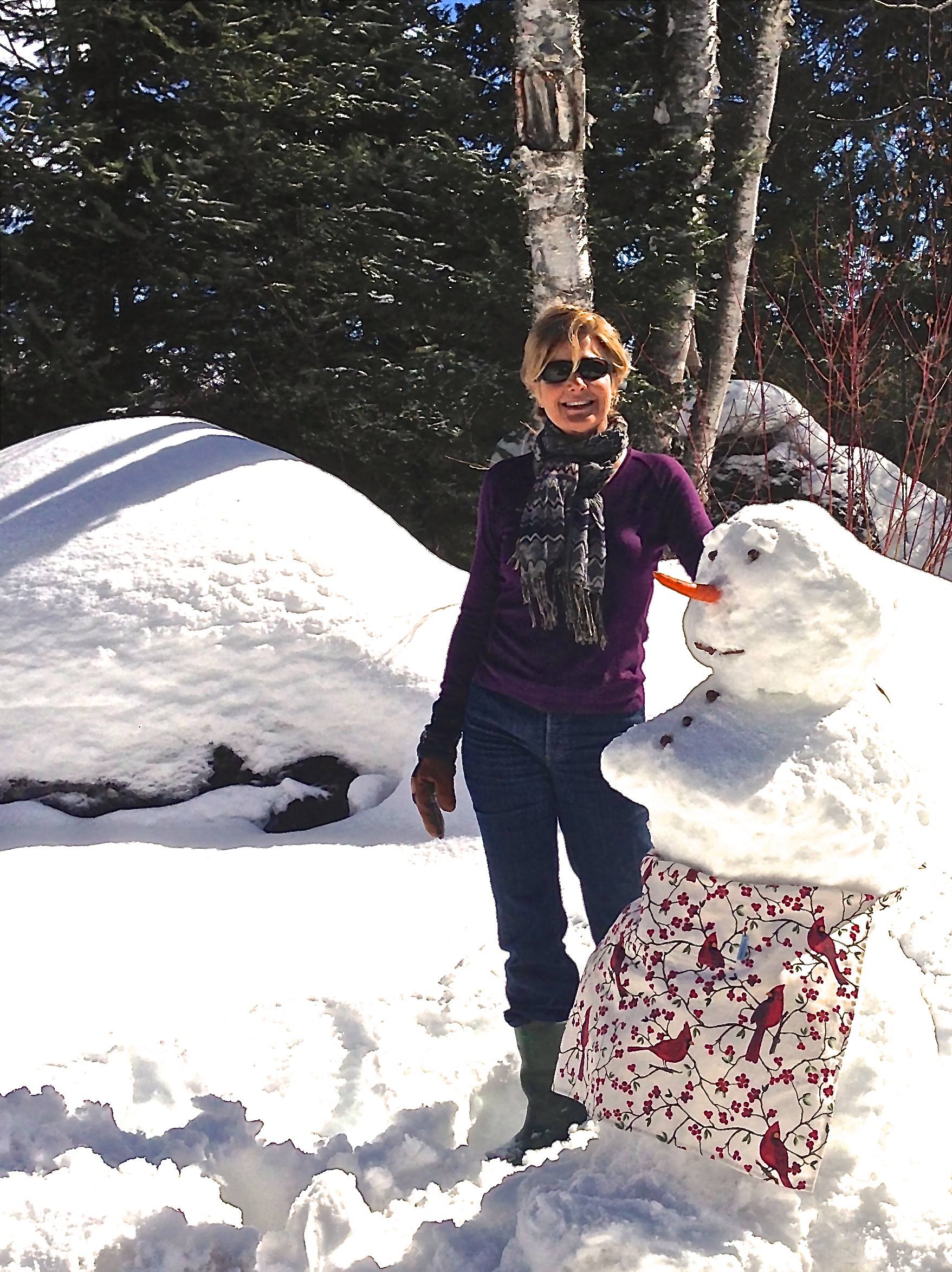
My first snow woman. Chesty little thing isn’t she?
So, now for the bread recipe- which makes 2 healthy loaves.
Ingredients:
- 4 cups coarse wheat flour
- 4 cups white wholewheat flour
- 2 teaspoons salt
- 1 package (8 grams) dry bakers yeast or 50 grams fresh yeast
- 2 tablespoons butter
- 2 cups milk (1% or skim)
- 1 cup water (do not use well water, since too many minerals impede the yeast)
- ½ teaspoon sugar (to feed the yeast)
- olive oil and butter (for preparing bowl and loaf pans)
Step-by-step directions:
Dry ingredients:
First, mix the flours and salt together in a large bowl. Set aside.
To activate the yeast (wet ingredient #1):
Next, in a larger vessel than you think you need (I am speaking from experience), heat just one cup of the milk and 1/2 cup of water until quite warm, but not too hot. I used a microwave for this step.
Baking, particularly when yeast is involved, is a science. So it helps to use a cooking thermometer to make sure that the liquid is not too hot and not too cold. To be just right for activating yeast, the temperature should be between 105°-115° F or 41°– 46° C.
When the temperature of the liquid is just right, add the sugar and stir. Then slowly add the yeast to the warm mixture. (If you add it too quickly, you will end up with a gooey lump of yeast – again, I am speaking from experience on this one as well). Stir very gently with the end of a spoon to make sure the yeast is well integrated. Set aside in a warm place (the back of your stove perhaps) until the yeast mixture doubles in size (which is why you need a larger vessel than you may think you need).
To melt the butter (wet ingredient #2):
Meanwhile, heat the remaining cup of milk and the 1/2 cup of water together in a small pot. Add the butter to the warm liquid until just melted, making sure not to boil.
Introduce wet to dry:
Once the yeast liquid (wet ingredient #1) has doubled in size, alternate adding it and wet ingredient #2 to the dry ingredients a little at a time. Mix after each addition of wet ingredients.

Wet and dry ingredients combined. So far, so good.
Kneading#1
Now comes the fun part! Sprinkle flour on your work surface. Place the mixed dough on the surface and knead purposefully at least 10 minutes. The dough at this point should appear to have a life of its’ own, and should slowly spring back into shape when you give it a poke.
Rising and Resting
Next, oil the inner surface of a large bowl with olive oil. Place the kneaded dough in the bowl and cover the bowl with plastic wrap (otherwise, the dough will get crusty- like mine did the first time I tried this recipe) and put in a warm place until it doubles in bulk. This can take from 1-2 hours, so you have time to rest while the yeast gets to do its’ work.
Kneading#2
Take the dough from the bowl, and return it to the floured surface. Knead once again for another 5 minutes. Ahhh! I love that feeling.
Final Rise
Now, divide the dough into 2 equal sized pieces and place each one in a lightly greased (I used butter) loaf pan. Let the dough rise again for another 1-2 hours
When the dough in the loaf pans have risen to twice their original size, place the pans on the lowest rack of a preheated oven 400F (200C) .
Bake for 45 minutes and then remove from the oven to cool.
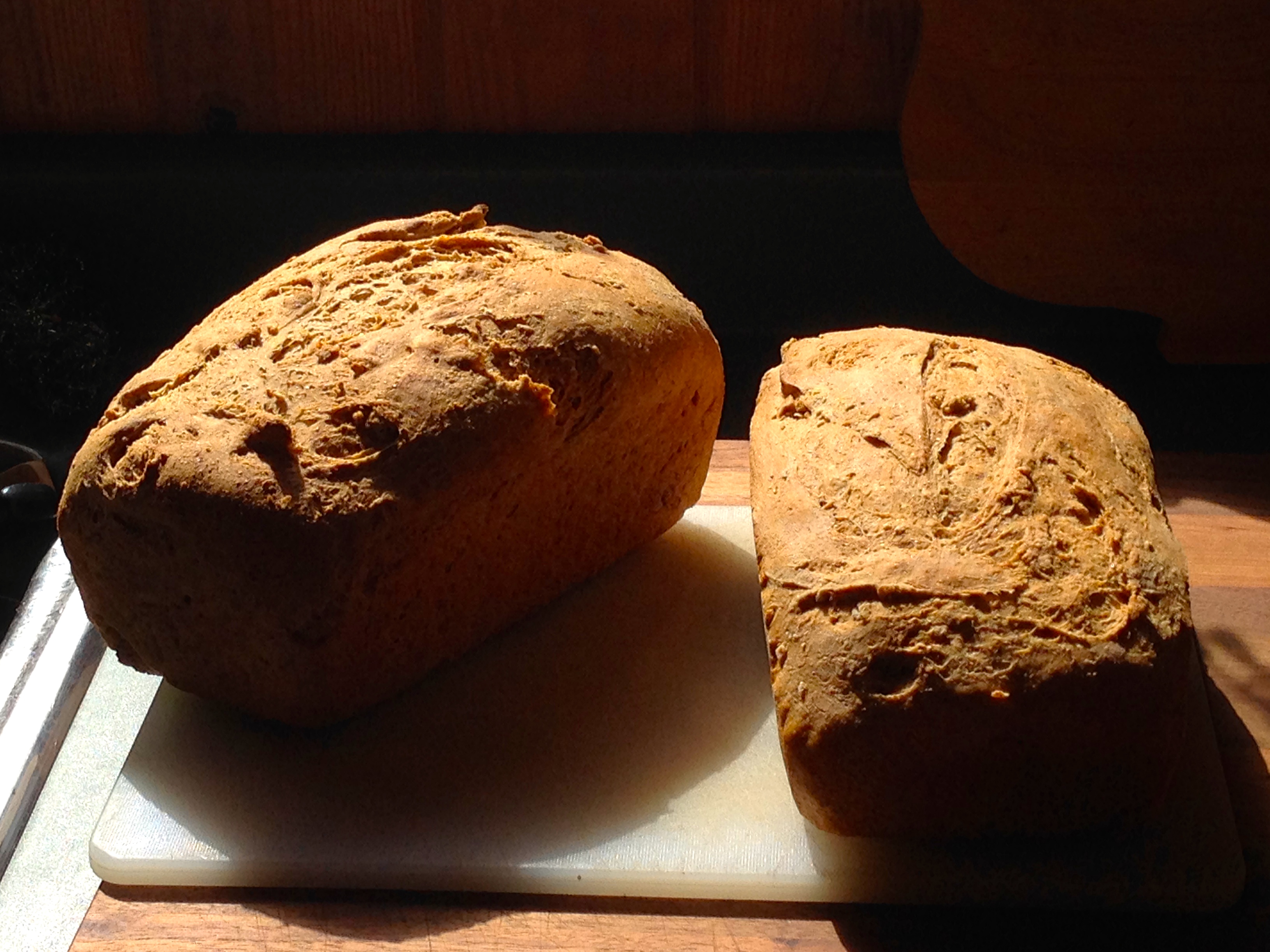
Enjoy a slice of this amazing bread, slathered with sweet butter and you will be able to experience what Norwegians have known all along. Heavenly! And good for you too!